
It’s Advent time again, so here’s another round of Art Advent, during which I post inspiring, cheerful or consoling artworks I’ve seen over the past year. With 2024 being particularly rough with the world going mad on so many fronts, I continue to believe in the power of art and putting beauty, fragility and love first – in anticipation of the new year to come. I hope you’ll join me on this Art Advent once again!
The Art Advent gets daily updates on my social media and within the blog posts on this site.
ART ADVENT #8 || Dec. 8.
I love so many of the details in this photograph of a father and daughter. The glasses he took off to pose for the photo, her Nokia 3310 within a fingertip’s reach, the writing “Love my boy” on her hand, and the upside down Monet poster above them. It makes me adore them. The photograph is part of the collection of the AROS museum in Aarhus. A place that personally means a lot to me. In 2015 the museum organized a large Monet exhibition. In it they criticized the commercialisation of Monet’s artworks and asked the question whether all those mugs, napkins, postcards, fridge magnets etc. subjected the actual artworks to inflation. In one of the exhibition rooms, they recreated a dentist, doctor or other kind of waiting room. When taking a seat on one of the waiting chairs, visitors would see a Monet calendar in front of them. While behind them, an actual Monet painting was placed. It was one of the boldest – and to me to this day, questionable displays of top notch art. I still don’t know what to think of it, but bold it was. I love how this particular photo of a father and daughter, through that detail of the poster, elicits such memories for me.

Henrik Saxgren, Somali Father with Daughter, 2002.
Collection of, Seen at AROS, Aarhus
ART ADVENT #9 || Dec 9.
I saw this tender water color in the gallery space of Leiden University Medical Centre. It felt like the work of artist Caren van Herwaarden was made for this context, as it confronts people with, but also consoles them about, their own human fragility and vulnerability. Although the figure on this water color seemingly stands alone, they are held by many hands. The delicate materiality of Van Herwaarden’s multilayered water coloring technique reinforces the multilayered complexity -and beauty- of human life. I find it a beautifully moving artwork.
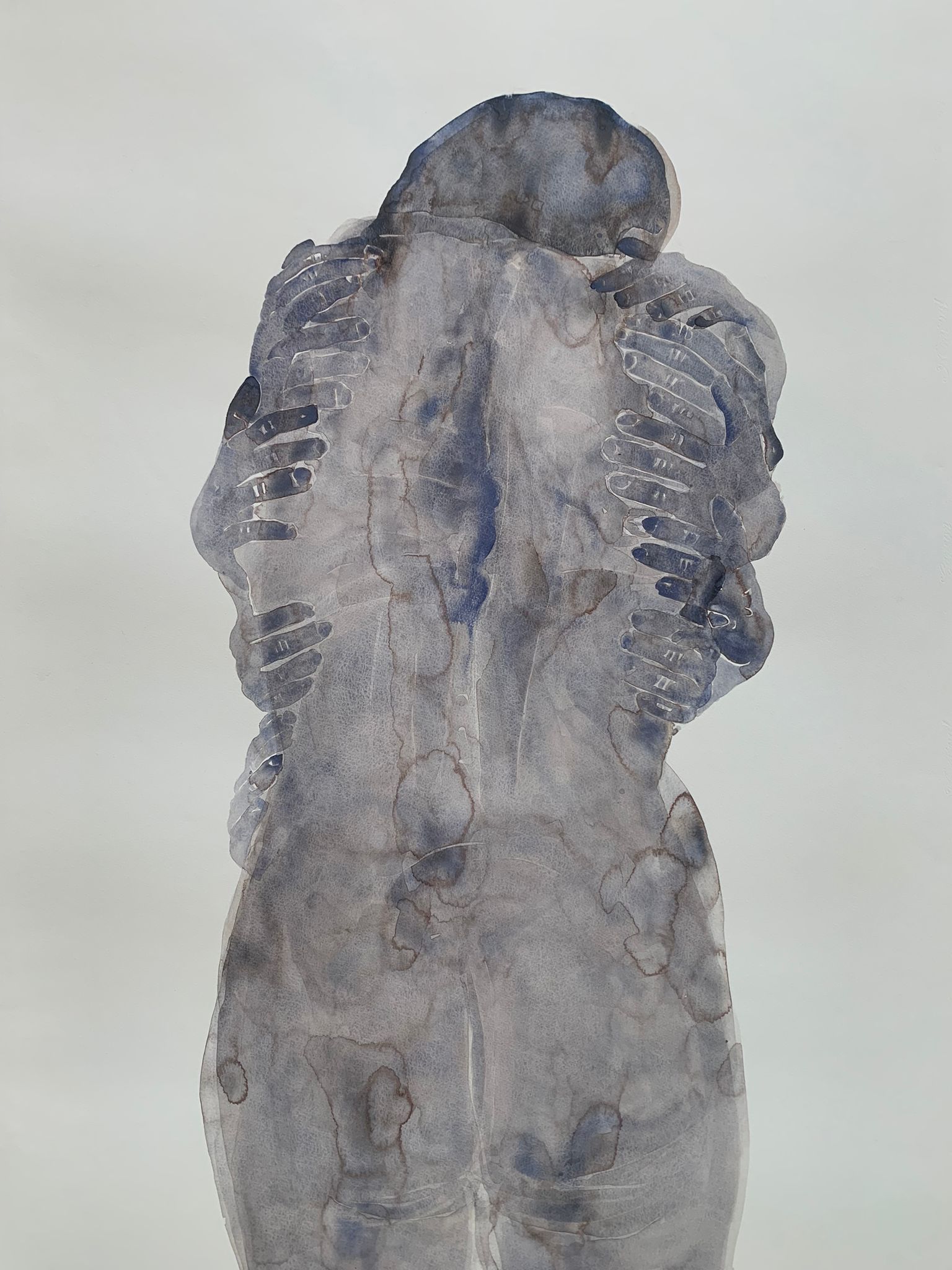
Caren van Herwaarden, In your arms (detail), 2022.
Collection of the artist, seen at LUMC Gallery, Leiden
ART ADVENT #10 || Dec 10.
This is a detail of a room that feels abandoned, dystopian almost. Three cushions on the floor invite you to take a seat, and take your time to immerse yourself in a storm. Once seated, you start noticing details: dripping sounds, water stains on the ceiling, buckets everywhere. Thunder rumbles in the distance, at some point rain starts pouring from the sky and lightning sets loose. At the storm’s highlight, the floor rumbles and the fan starts blowing on its own. To make it even more mysterious, as the storm fades away again, you hear someone roaming around and coughing, apparently next door. While you’ve felt all alone in this room feels about to collapse, it turns out you’re not alone in the end. Despite everything that’s going on, seated on the floor you also experience a strange sense of safety, a sense of shelter. It’s a fascinating, unforgettable experience.
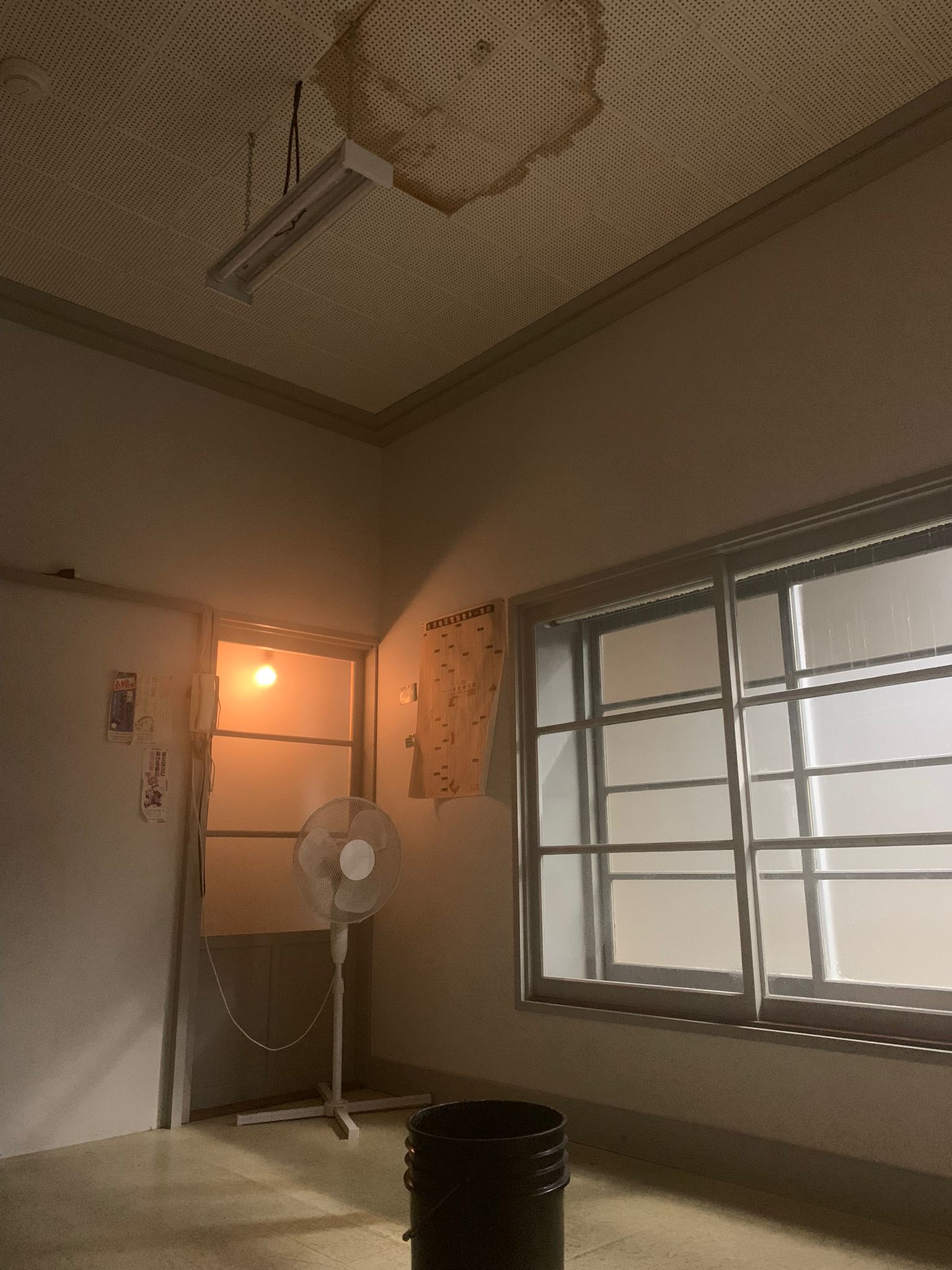
Janet Cardiff and George Bures Miller, Storm Room, 2009
Collection of, Seen at AROS, Aarhus.
ART ADVENT #11 || Dec. 11.
In Belgium this year the 75th anniversary of James Ensor’s death was the topic of a jubilee year. The year ended with a major exhibition at the beautiful KSMKA in Antwerp. While I am generally intrigued by the work of James Ensor, in this exhibition I particularly liked the loans from other museums. This painting by Emil Nolde was one of my favorites. It’s called Paradise Lost. The lion and the snake are of a touching, childish nature. While Adam has a strict look on his face, Eve is expressing much more emotion. Her bright blue eyes radiate an intense sense of disillusionment, she is lost indeed.

Emile Nolde, Paradise Lost, 1921.
Collection of Stiftung Seebüll Ada und Emil Nolde, Neukirchen; Seen at KSMKA, Antwerp.
ART ADVENT #12 || Dec 12.
As many of you know I have a special place in my heart for Mary Magdalene. She has featured in several previous editions of the Art Advent. Obviously there are many amazing historic artistic depictions of Mary Magdalene. But I find it also fantastic to see how young artists continue to find inspiration in her as well. One of my favorites I saw this year, was a series by Belgian artist Delphine Somers. Here we see hairy Mary telling off, or rather learning a moral lesson to, Jeff Bezos and his wife Lauren Sanchéz. It’s a 21st-century translation of the Golden Legend story about Mary Magdalene going to France and converting the French king and queen with some seriously tough love. Today’s global king and queen might just be the likes of the Amazon founder (note the boxes on the carpet). Somers transports Mary Magdalene into contemporary life, critiquing current social norms and values – while simultaneously reinforcing the saint’s continuing relevance.
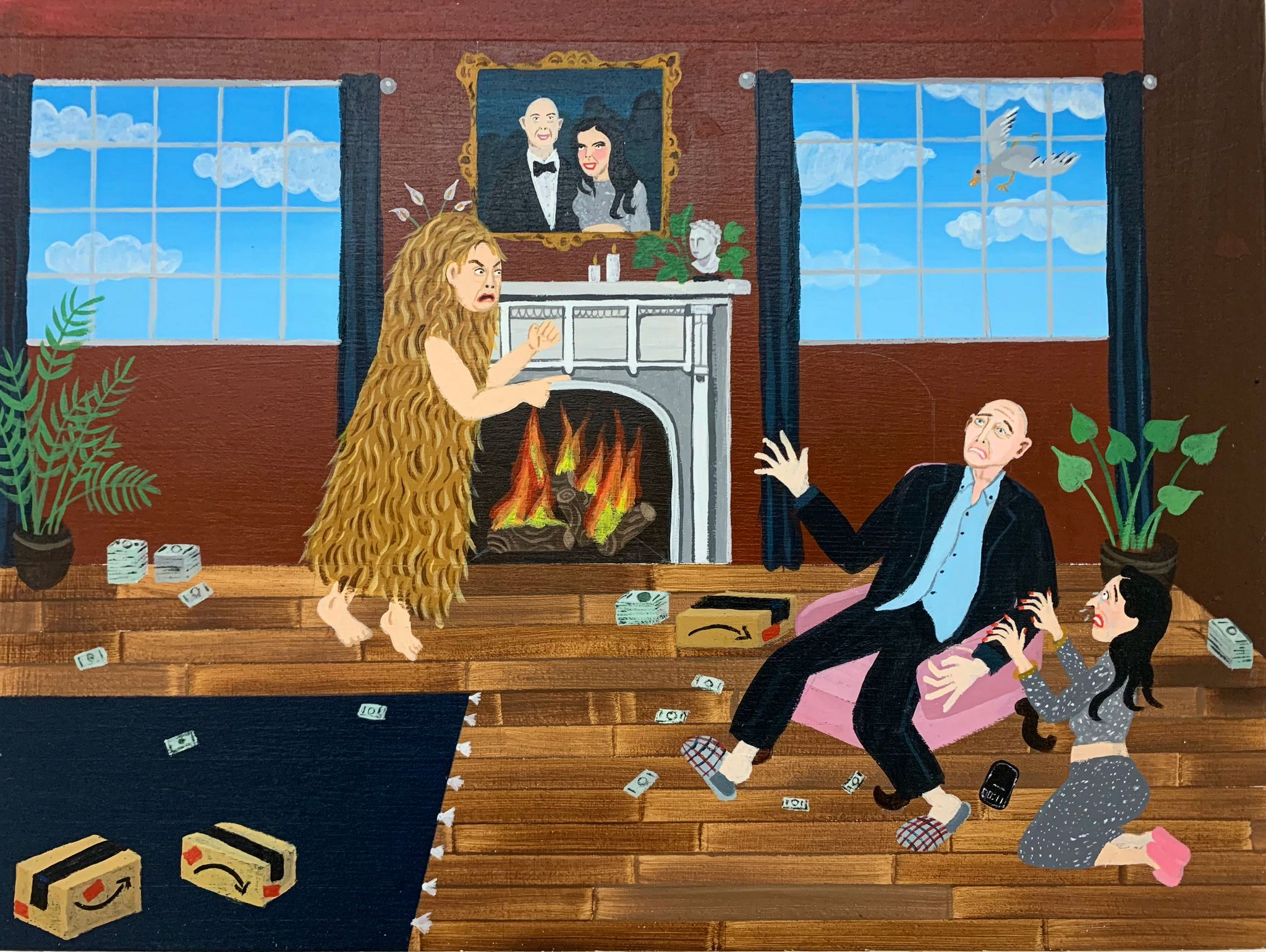
Delphine Somers, The Life and Works of Mary Magdalene, 2024. 1 of 9 panels.
Collection of the artist. Seen at Second Room, Antwerp.
ART ADVENT #13 || Dec. 13
On March 3, 1920, Madge Gill was visited by a spirit she called Myrninerest. She was 38 years old at the time, and would remain in contact -and occasionaly possessed- by Myrninerest for the rest of her life. During such visits, Gill was in trance and produced large amounts of improvisations, artworks of hallucinating character. When she passed away in 1961, her entire house was apparantly packed with artworks, from cupboards to under the bed. While her drawings have been displayed in various exhibitions until now, her tapestries have not been publicly shown often. Still, these might be the most telling representations of what a possessed trance might look like: ungraspable, wuthering and disruptive.
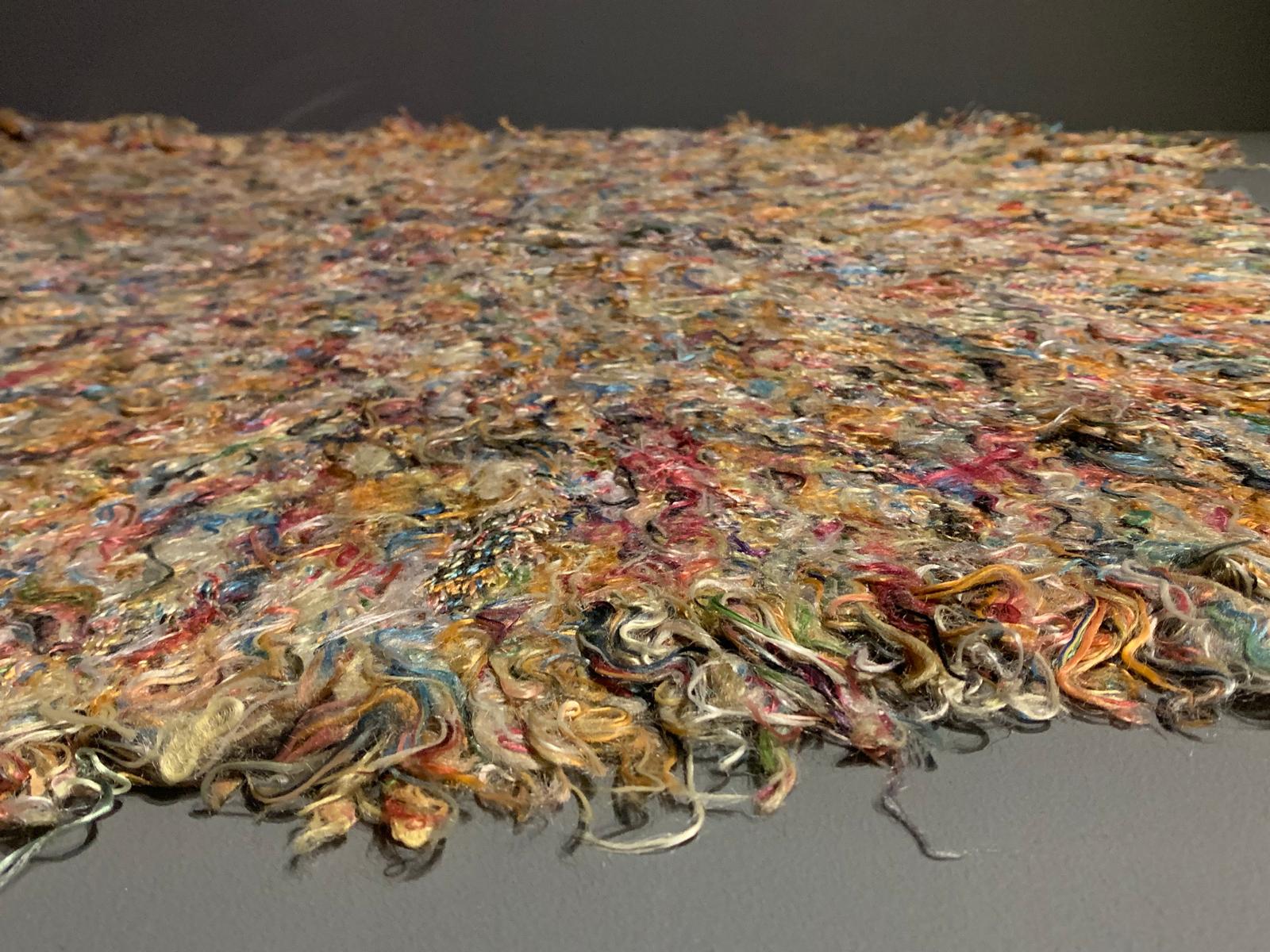
Madge Gill, Embroidered tapestry (n.d., rediscovered in 2018).
Private collection. Seen at Museum Krona, Uden.
ART ADVENT #14 || Dec 14.
Three days ago I wrote about the fabulous loans to the James Ensor exhibition at KMSKA. Here’s another one, this glimpse of a cafe concert by Edouard Manet. I have loved the paintings of Manet for as long as I can remember. His portraits, scenes of urban life (like this one) and even his still lifes (no one paints asparagus like Manet). Seeing this fabulously perceptive work from the London National Gallery’s collection in Antwerp did not disappoint. It was like running into an old friend in a new place. I love the multiple layers in this composition, the dancer/ singer in the back on stage, the musicians in front of the stage, and the servant and visitors in the front. I also adore how the servant goes about her business, not being intimidated or distracted by the men around her.

Edouard Manet, Corner of a Cafe Concert, 1878.
Collection The National Gallery, London.
Seen at KMSKA, Antwerp.

 dr. Lieke Wijnia